Publishings Digital Citizen
Program Areas
-
Press Release
Meta Settlement Reaches the Features, Not the Engine
CDD Statement on Meta's Settlement with State Attorneys General
CDD Statement on Meta's Settlement with State Attorneys GeneralFOR IMMEDIATE RELEASEAugust 26, 2026 | Center for Digital Democracy, Washington, DCContact: Katharina Kopp, kkopp@democraticmedia.orgJeff Chester, jeff@democraticmedia.org, 202-494-7100The following statement is attributed to Katharina Kopp, Ph.D., Deputy Director and Director for Policy, Center for Digital Democracy:“The settlement reaches the features of Meta’s platforms but not the engine that drives them. Meta earns nearly all of its money from advertising. Young people’s attention is the inventory it sells. Design that captures and holds that attention is not a flaw in the business model, it is the business model working as intended. Meta can remove “like” counts. What it will not remove is the reason it built them. The penalty does not change that calculation. Roughly $17 billion paid over ten years is about $1.7 billion a year, or roughly ten days of Meta’s annual profit. Children were harmed for years while this business model ran unchecked. This settlement addresses some of what that produced. It does not touch what produced it.“The practices at issue have moved on since these cases were filed in 2023. AI is now embedded across the whole of the advertising apparatus, and Meta is among the most aggressive adopters. CDD documented that build-out in our June 2026 report, The Persuasion Pipeline. These systems infer in real time what moves a young person, generate the message to match, deliver it inside a feed, a chatbot conversation, or an assistant’s recommendation where it does not read as advertising at all, and measure the result to sharpen the next attempt. Much of this runs on inference and cohort-level prediction rather than on stored records about an identified child, which is why laws written to govern the data a company holds keep missing it.“A further weakness is structural. Much of the relief depends on Meta correctly identifying which of its users are under 13 and under 18, a determination made by systems the company builds and operates, with a commercial interest in the answer. Checking that a feature was switched on is one thing. Looking inside the systems that decide who is a child in the first place is another, and that is what is needed here: independent scrutiny, by people outside the company, with real access to how those systems work. More fundamentally, protections for young people should not hinge on what a company claims to know about any individual child. Accountability should turn on what a system does, and where a system’s outputs reach minors in disproportionate numbers, the burden should sit with the company to show it is not running prohibited practices against the children it reaches.“None of this takes away from the changes Meta has agreed to make, which we welcome. Shutting Instagram down overnight for minors’ accounts, capping daily use, ending notifications during the school day, removing like counts and plastic surgery filters, and new guardrails against predatory adults are protections children should have had years ago. The attorneys general secured them under the threat of a jury verdict, after a decade in which Meta declined to act on its own.“But protections won this way, one company and one feature at a time, cannot keep pace with what is being built. States and Congress have to reckon with the business model itself and the risks it generates. That means capability-based rules limiting what these systems may do to young people, not only what data companies may hold about them, and an end to advertising and marketing aimed at minors.”The Persuasion Pipeline: How Commercial AI Targets, Shapes, and Sells to a Generation of California’s Children and Teens is available at https://democraticmedia.org/reports/the-persuasion-pipeline .### -
Press Release
AI and Platform Companies Are Building an Unaccountable Persuasion Pipeline, and They Are Pointing It at Children
How generative AI changes commercial persuasion, and why privacy law alone cannot fix it
FOR IMMEDIATE RELEASEAugust 13, 2026Contact: Katharina Kopp, 202-836-4621, kkopp@democraticmedia.orgJeff Chester, 202-494-7100, jeff@democraticmedia.orgAI and Platform Companies Are Building an Unaccountable Persuasion Pipeline, and They Are Pointing It at ChildrenHow generative AI changes commercial persuasion, and why privacy law alone cannot fix itWASHINGTON, D.C. - The transformation of media and marketing by artificial intelligence poses serious risks to the public, and especially to young people. Platform companies are embedding AI capabilities, including generative, conversational, and agentic AI, deep into advertising, programming, and commerce, fueling a new wave of commercial surveillance and manipulation that reaches all of us and that falls hardest on communities of color. For children and teens, this is not a distant prospect. These systems are already embedded in the products they use every day. A report released today by the Center for Digital Democracy (CDD) documents the harms they pose across children's lives, and finds that a category of AI-driven advertising, built on real-time, cohort-level inference rather than on identifiable personal data, falls into a structural gap that privacy and consumer-protection law was not designed to govern.Generative AI collapses steps that used to be separate. A single system can now produce a commercial message, deliver it as conversation, and adjust it to a particular child in the same moment. It can sort a first-time user into a behavioral cohort, estimate how persuadable she is, and shape what she sees within seconds, drawing on models trained on millions of other people and often without writing any durable record about the child being acted on. Children and teens are among the earliest and heaviest users of these systems, which makes them the most exposed. Sixty-four percent of U.S. teens have used AI chatbots and 30 percent use them daily, with adoption highest among Black and Hispanic teens.Nothing about the technology required these companies to build advertising into their AI products. They chose to. The report examined nine AI products across nine companies - Meta, Google, OpenAI, Microsoft, Amazon (Alexa for Shopping), Snap, xAI, Anthropic, and TikTok - and found seven of the nine confirmed or likely to serve advertising inside AI chat, to use chat interactions to target advertising elsewhere, or both. Only one, Anthropic, has committed to remaining ad-free. The ninth, TikTok, has no standalone chatbot, though its platform-wide advertising system is AI-driven."A teenager talking to one of these systems is on the other side of a model trained on millions of people and optimizing against her as she types," said Jeff Chester, CDD's executive director. "She has nothing to match it with, and no way to see it working. Every exchange teaches the system how to sell to the next child a little more effectively. That is not a loophole someone stumbled into. It is the business model these companies chose."The Persuasion Pipeline: How Commercial AI Targets, Shapes, and Sells to a Generation of California's Children and Teens, by CDD Deputy Director and Director for Policy Katharina Kopp, Ph.D., traces commercial influence through six connected layers - data collection, profiling, targeting, creative generation, interaction, and measurement - and finds AI now running all six and linking them in feedback loops that get better at influencing children with every cycle.Where these practices rest on personal data about an identifiable child, privacy law does apply, though first-party exceptions can exempt a platform's own advertising even then. The difficulty is what happens when there is no such record for a right to attach to. Comprehensive federal privacy legislation remains necessary and overdue, but law anchored to the data a company holds about an identifiable person will not by itself close this gap. And while more than three dozen states have adopted over a hundred AI laws, none takes the AI-driven advertising and marketing pipeline as its object, and none requires a company to disclose what these systems are built to maximize."These companies have built the most sophisticated persuasion infrastructure in history and are pointing part of it at children," said Kopp. "We still need a strong federal privacy law and we should pass one. But privacy law alone will not reach this. Lawmakers have to govern what these systems are able to do, not only what they store, and judge companies by their effects on children rather than by what they claim not to have known."The burden is not evenly distributed. The report finds that youth of color and lower-income families face disproportionate exposure at every layer of the pipeline: higher rates of data collection driven by more intensive platform use, profiling that sorts users along racial and socioeconomic lines through behavioral proxies, optimization that steers unhealthy product advertising toward Black and Hispanic audiences, AI-generated creative that embeds raciolinguistic stereotypes, and measurement systems that compound these biases with every cycle. AI did not create these disparities. It formalizes them and runs them at a speed and scale manual marketing could not reach.What This Does to ChildrenThe report documents eight harms, moving from what these systems hold about a child to what they can do to her in the moment. They include children's private disclosures converted into commercial data, discriminatory outcomes produced by optimization, whatever the intent, manipulation through trust the systems are built to earn, emotional exploitation as a business model rather than a side effect, influence pitched below the level a child can recognize, and identity shaped around commercial values. The last two fall on children as a group - the saturation of childhood by commerce and the erosion of independent choice, whose effects compound across a generation and distort the market itself.This Is Already in the Products Children UseIn April 2026 Fenty Beauty launched an AI beauty advisor inside WhatsApp, built in the brand's own words to feel "like a text from a friend." A teenager describing her skin concerns receives product recommendations mixed with creator videos and fan reviews, with no obvious advertisement to recognize. What she does not see is the commercial partnership routing her questions through WhatsApp's business tools, or that Meta has used interactions with its AI tools to personalize advertising across its apps since December 2025, with no opt-out.1 Meta says it does not apply that personalization to users it knows to be under 18, whose ad targeting it limits to age and location. That protection depends entirely on the company correctly identifying who is a minor.In February 2026 OpenAI launched sponsored ads in the free version of ChatGPT, with ad personalization on by default. The company says it will not show ads during this test to users it predicts are under 18, a commitment that covers only the testing phase and rests on its own age-prediction model, which no outside party has audited. In April 2026 Snapchat introduced brand-operated chat agents that sit in a user's Chat tab and behave like any other contact. The only signal that an exchange is an advertisement is a single light-gray "Ad" label. Across all nine platforms the report's appendix examines, the capacity to infer who a young user is, sort them into commercial cohorts, and optimize against them in real time is nearly universal. Almost none of it is visible in what the companies disclose, and the protections that do exist are narrow, self-defined, and concentrated where legal pressure has already been applied. Disclosure should be required, but it is a floor. The harm comes from what these systems are built to do, which is why the law has to reach the capability itself.What the Report Asks ForThe report proposes four principles for legislation, framed as obligations on the companies rather than as restrictions on young people's access or new burdens on parents.1. Make commercial influence legible. Require companies to disclose what their systems are built to maximize, including the advertising-optimization layer, so that regulators, researchers, and advocates can scrutinize what these systems are designed to do.2. Prohibit the most harmful capabilities outright. Bar advertising directed at children in these environments, or at minimum advertising targeted or personalized to them, along with optimizing for persuadability, inferring emotional states for commercial purposes, and running the closed measurement loop.3. Replace knowledge standards with outcomes-based accountability. Trigger obligations on what a system does to minors as a group, not on what a company admits it knew about any one of them.4. Place accountability on the more powerful party. Cut the closed-loop data flows, so targeting data does not flow in and what is generated inside does not flow back out. Reject consent carve-outs and safe harbors, and require independent audits of commercial influence in model behavior.The report is addressed to California, home to roughly 8.4 million children and to the companies building these systems, and its framework is written so that Congress and other states can adopt it. A December 2025 survey found 60 percent of Americans, across party lines, want more regulation of AI.Statement from Senator Edward J. Markey (D-Mass.)"Big Tech should not be allowed to turn children's vulnerabilities into fuel for an AI-powered persuasion machine," said Markey. "This report makes clear that AI companies are building systems that can surveil young people, predict what will move them, and blur the line between trusted conversation and commercial manipulation. We need strong rules of the road that put children's privacy and well-being ahead of corporate profits. The Center for Digital Democracy has provided an important service by sounding the alarm on these AI-driven dangers to our young people. I am committed to ensuring that AI does not become yet another technology that Big Tech uses to exploit kids for profit." The Persuasion Pipeline, with an executive summary in English and Spanish and a platform-by-platform appendix, is available at https://democraticmedia.org/reports/the-persuasion-pipeline. Findings are current as of June 2026.The Center for Digital Democracy is a Washington, D.C.-based public interest research and advocacy organization working on behalf of citizens, consumers, communities, and youth to protect and expand privacy, digital rights, and data justice. CDD's project on commercial AI in advertising and marketing aimed at young people is funded, in part, by the Rose Foundation for Communities and the Environment.###Note to editors1. Fenty Beauty, "Rose Amber" AI advisor, WhatsApp launch, April 2026, as reported by Glossy and Digiday. On Meta's use of AI interactions for ad and content personalization: Meta, "Improving Your Recommendations on Our Apps With AI at Meta," October 1, 2025, effective December 16, 2025, about.fb.com. -
The transfer of TikTok’s United States operation to a group of Trump administration-selected controlling investors should be vigorously opposed, as it would effectively endorse the current extractive system shaping our social media platforms and most other commercial digital services.TikTok orchestrates its social media marketing business in the same ways that Meta and Google do — harvesting our data, leveraging the power of the now ubiquitous generative artificial intelligence products, closely partnering with the most powerful global brands, ad agencies and adtech companies and enabling an array of human and virtual influencers — all to generate the mechanisms of “engagement” that are the core of the commercial surveillance monetization model for our digital media.How are we ever to reform our country’s current digital media giants — as well as the AI behemoths lined up to become new, ad-saturated marketplaces — if our government uncritically sanctions the current business model?A US TikTok should be required, at the very least, to operate its data practices in ways that really protect privacy, shield users from manipulative and unfair marketing tactics, adopt accountable generative AI applications, and serve in ways that strengthen our democracy, including by promoting civic discourse, civil rights and diverse viewpoints.While such proposals may appear to be digital “pie in the sky” aspirations at this perilous political moment, the transfer of TikTok’s US ownership and its connections to recent and pending mega-media mergers is precisely the moment to make our views known and put up a fight.Of course, the debate over TikTok here has focused on owner ByteDance’s relationship with China and the concern that its autocratic government will surveil and target Americans.While that’s a legitimate issue, Google, Meta, Amazon and many other digital media companies are as serious a threat to us personally and collectively. They are all conducting far-reaching data surveillance on Americans (and people worldwide), unleashing algorithms and online content designed to profoundly influence what we think, do and consume. Disinformation on these platforms is not only abundant but supported. As we saw with the Cambridge Analytica privacy scandal and elections in the US and in Europe, US-based platforms can easily be manipulated by foreign and other actors. There are still endless headlines about the latest social media-inspired tragedy — from individual acts leading to suicide and violence to the promotion of hate and even genocide — which sadly illustrate why our digital media system is in desperate need of transformative change.The Trump administration’s unleashing of generative AI technologies, which are now used by our platforms to accelerate and deepen the impact of their commercial surveillance marketing, is hurdling our digital media system to gather and analyze even more information on us and more efficiently deploy it to better sell, influence and direct our behaviors.There is another looming problem with US President Donald Trump’s TikTok plan — the expansion of MAGA-influenced media control over that platform, as well as leading news services, streaming video channels, broadcast stations and media production studios. In particular, this would be the likely role played by Trump ally and the billionaire chair of Oracle Larrry Ellison. Transferring key TikTok assets to be managed by Oracle is key to the White House’s plans.As we know, Ellison’s deep pockets enabled his son David recently to acquire Paramount/CBS. There have already been a number of troubling concessions to the Trump administration to get the deal through, including installing a politically conservative ombudsman at CBS News, acquiring the Free Press website and tapping its founder Bari Weiss to lead CBS’s newsroom.Next on the agenda are the Ellisons’ buying Warner/Discovery/CNN. Their potential control over two major news operations — which would likely see layoffs and staff purges — could provide Trump and his allies greater ability to shape the information narrative to their benefit. A combined Paramount/Warner would also provide the Ellisons’ a slew of streaming video, cable and broadcast channels (including sports and animation), film production facilities, adtech operations and more. Imagine all these media properties, including TikTok, acting synchronously, supporting a MAGA agenda that leverages the massive data gathering and targeting power of contemporary digital platforms to reach individuals and influence their political perspectives.Given Oracle’s considerable business interest and expertise in digital data used for marketing, its “oversight” of a US TikTok algorithm will not lead to better privacy and consumer protections for Americans. Ellison’s Oracle has long provided a host of data tools for digital marketing, and has also added numerous generative AI tools to advance it. The company touts its ability, for example, “to create a connected and personalized experience,” including by combining “online, offline and third-party data with AI and machine learning.” According to reports, ByteDance will still control TikTok’s e-commerce and advertising business in the US. This means that the numerous global and US-based advertisers who have found significant success exploiting TikTok will continue to operate in a business-as-usual manner, able to purchase advertising and influence relatively seamlessly across the globe. Given that access to data is central for this key revenue generator, how exactly will Oracle and ByteDance work together to keep TikTok’s more than $16 billion US revenues flowing? This question demands answers now.There are an array of policy issues that can be used to challenge Trump’s TikTok scheme, helping publicize the need to reforming US digital media and also potentially slow down the final transfer of ownership, including numerous data privacy and consumer protection issues. The Ellisons’ takeover of Paramount/CBS also involves significant data gathering by its streaming video channels, for example. The antitrust implications should be reviewed to address the impact on competition involving TikTok, Paramount/CBS, Warner/Discovery/CNN, Oracle and its many clients.There should be challenges filed at the Federal Trade Commission, Department of Justice and state attorneys general, as well as public hearings on what this means for consumers, creators, young people, journalism and the institutions supporting democratic discourse.A raft of other questions should be raised, including about the proposed set of TikTok’s owners and their own involvement with China and other potential conflicts. For example, Oracle has recently brokered a “gigantic contract” with Chinese-ecommerce company Temu. It is also profiting from serving as TikTok’s cloud computing provider. However, the company is currently experiencing a cash flow problem, according to Bloomberg, and has announced layoffs, raising questions about whether Trump’s TikTok deal is also designed to financially boost an ally.Oracle’s recent expanded alliance with Google to offer that company’s most advanced Gemini AI services on its cloud illustrates the web of digital partnerships that undermine competition and increase the prospects of greater data harvesting. Silver Lake Partners, one of the other proposed US investors, has invested in numerous Chinese companies, including one accused of facilitating surveillance on the ethnic Uyghur community there. Abu Dhabi-based MGX, an AI-focused investment company that is being rewarded a US TikTok ownership role and is supporting Trump’s “Stargate” AI initiative here, has a range of financial relationships, including with Elon Musk and OpenAI, which require scrutiny as well.I was among the digital rights advocates working in Washington, DC, in the very early 1990s as the world wide web became ad supported and commercialized. Our NGO (then called the Center for Media Education) was one of the very few to oppose the role that data tracking would play in delivering targeted marketing. Industry lobbyists and their political allies were successful in making sure there were no impediments to extensive data-mining online — which is why today we still don’t have a federal consumer privacy law.If the internet has an “original sin,” it was allowing the major platforms, their brand advertiser and data-broker partners successfully to transform the internet into a highly centralized and powerful apparatus designed to place the interests of marketers and their oligopolistic platform collaborators ahead of the needs of a civil and equitable society.We are at a critical moment today — just as important as those early days. Generative AI has been rapidly adopted across our digital, industrial and marketing sectors. It is accelerating the capabilities of the commercial surveillance model and, through partnerships and alliances, allowing our current leading online giants and a few newcomers to be among the dominant players.The proposal to allow Trump’s political allies to operate TikTok in the US, without significant reforms and safeguards, as well as likely permitting a MAGA media industry trifecta provides a much-needed opportunity to articulate an alternative vision for US digital media. One reason we have ended up with the current crisis, I believe, has been the historic and collective failure to articulate and support communications policies that would have helped our democracy better thrive. With Trump’s September executive order giving the “divestiture” 120 days to finalize, now is the time to use all our resources — including on TikTok and other social media — to offer a better and alternative outcome.Originally published by Tech Policy Press, October 10, 2025
-
Press Release
CDD Joins Twenty-Four Other Consumer Protection and Digital Rights Groups in Condemning the Illegal Firing of Two Democratic FTC Commissioners
Groups are urging lawmakers to launch a probe into the recent firings and to block the confirmation of President Donald Trump’s FTC nominee until the fired commissioners get their jobs back.Read full letter attached. -
Press Release
In Firing The Two Democratic FTC Commissioners, Pres. Trump Places Every American Consumer At Grave Risk
Statement of Jeff Chester, executive director, Center for Digital DemocracyMarch 19, 2025 In a country where illegality is quickly replacing the rule of law, the action yesterday by Pres. Trump ending the decades of bi-partisan operations at the Federal Trade Commission (FTC) may seem insignificant. But for anyone concerned about lower grocery prices, protecting privacy online, consumer protections for your money when buying goods and services, or whether children and teens can use the Internet without mass surveillance and manipulation, they should be very, very worried. Why did Pres. Trump do this now? It’s because the U.S. is on the verge of a transformation of how we shop, buy, view and interact with businesses online and offline—due to the confluence of Generative Artificial Intelligence, expansion of pervasive data gathering and personalized profiling, and the deepening of alliances and partnerships across Big Tech, Big Data, retailers, supermarkets, hospitals, databrokers, streaming TV networks and many others. Trump’s allies—especially Amazon, Google, Meta/Facebook, and TikTok—do not want any safeguards, oversight or accountability—especially at this time when immense profits are to be made for themselves. The Trump Administration is rewarding the very same billionaires and Tech Giants who are responsible for raising the prices we pay for groceries, obliterating our data privacy, and making it unsafe for kids to go on social media. Consumer advocates won’t be silent here, of course, and we will document and sound the alarm as Americans are increasingly victimized by Big Tech and large supermarket chains. The FTC has been transformed into a Trump Administration and special interest lapdog—instead of the federal watchdog guarding the interests and welfare of the public. Americans who struggle to make ends meet—whether they need help securing refunds, recovering from scams, or ensuring fair treatment—will be especially harmed. But let’s be clear. The action of the Trump Administration to remove the FTC as a serious consumer protection agency has helped make every American further unsafe. --30-- -
Press Release
Streaming Television Industry Conducting Vast Surveillance of Viewers, Targeting Them with Manipulative AI-driven Ad Tactics, Says New Report
Digital Privacy and Consumer Protection Group Calls on FTC, FCC and California Regulators to Investigate Connected TV Practices
Streaming Television Industry Conducting Vast Surveillance of Viewers, Targeting Them with Manipulative AI-driven Ad Tactics, Says New Report.Digital Privacy and Consumer Protection Group Calls on FTC, FCC and California Regulators to Investigate Connected TV PracticesContact: Jeff Chester, 202-494-7100 Jeff@democraticmedia.orgOctober 7, 2024Washington, DC. The Connected TV (CTV) video streaming industry in the U.S. operates a massive data-driven surveillance apparatus that has transformed the television set into a sophisticated monitoring, tracking and targeting device, according to a new report from the Center for Digital Democracy (CDD). How TV Watches Us: Commercial Surveillance in the Streaming Era documents how CTV captures and harvests information on individuals and families through a sophisticated and expansive commercial surveillance system, deliberately incorporating many of the data-gathering, monitoring, and targeting practices that have long undermined privacy and consumer protection online.The report highlights a number of recent trends that are key to understanding today’s connected TV operations:Leading streaming video programming networks, CTV device companies and “smart” TV manufacturers, allied with many of the country’s most powerful data brokers, are creating extensive digital dossiers on viewers based on a person’s identity information, viewing choices, purchasing patterns, and thousands of online and offline behaviors.So-called FAST channels (Free Advertiser-Supported TV)—such as Tubi, Pluto TV, and many others—are now ubiquitous on CTV, and a key part of the industry’s strategy to monetize viewer data and target them with sophisticated new forms of interactive marketing.Comcast/NBCU, Disney, Amazon, Roku, LG and other CTV companies operate cutting-edge advertising technologies that gather, analyze and then target consumers with ads, delivering them to households in milliseconds. CTV has unleashed a powerful arsenal of interactive advertising techniques, including virtual product placement inserted into programming and altered in real time. Generative AI enables marketers to produce thousands of instantaneous “hypertargeted variations” personalized for individual viewers. Surveillance has been built directly into television sets, with major manufacturers’ “smart TVs” deploying automatic content recognition (ACR) and other monitoring software to capture “an extensive, highly granular, and intimate amount of information that, when combined with contemporary identity technologies, enables tracking and ad targeting at the individual viewer level,” the report explains.Connected television is now integrated with online shopping services and offline retail outlets, creating a seamless commercial and entertainment culture through a number of techniques, including what the industry calls “shoppable ad formats” incorporated into programming and designed to prompt viewers to “purchase their favorite items without disrupting their viewing experience,” according to industry materials.The report profiles major players in the connected TV industry, along with the wide range of technologies they use to monitor and target viewers. For example:Comcast’s NBCUniversal division has developed its own data-driven ad-targeting system called “One Platform Total Audience.” It powers NBCU’s “streaming activation” of consumers targeted across “300 end points,” including their streaming video programming and mobile phone use. Advertisers can use the “machine learning and predictive analytics” capabilities of One Platform, including its “vast… first-party identity spine” that can be coupled with their own data sets “to better reach the consumers who matter most to brands.” NBCU’s “Identity graph houses more than 200 million individuals 18+, more than 90 million households, and more than 3,000 behavioral attributes” that can be accessed for strategic audience targeting.”The Walt Disney Company has developed a state-of the-art big-data and advertising system for its video operations, including through Disney+ and its “kids” content. Its materials promise to “leverage streaming behavior to build brand affinity and reward viewers” using tools such as the “Disney Audience Graph—consisting of millions of households, CTV and digital device IDs… continually refined and enhanced based on the numerous ways Disney connects with consumers daily.” The company claims that its ID Graph incorporates 110 million households and 260 million device IDs that can be targeted for advertising using “proprietary” and “precision” advertising categories “built from 100,000 [data] attributes.”Set manufacturer Samsung TV promises advertisers a wealth of data to reach their targets, deploying a variety of surveillance tools, including an ACR technology system that “identifies what viewers are watching on their TV on a regular basis,” and gathers data from a spectrum of channels, including “Linear TV, Linear Ads, Video Games, and Video on Demand.” It can also determine which viewers are watching television in English, Spanish, or other languages, and the specific kinds of devices that are connected to the set in each home.“The transformation of television in the digital era has taken place over the last several years largely under the radar of policymakers and the public, even as concerns about internet privacy and social media have received extensive media coverage,” the report explains. “The U.S. CTV streaming business has deliberately incorporated many of the data-surveillance marketing practices that have long undermined privacy and consumer protection in the ‘older’ online world of social media, search engines, mobile phones and video services such as YouTube.” The industry’s self-regulatory regimes are highly inadequate, the report authors argue. “Millions of Americans are being forced to accept unfair terms in order to access video programming, which threatens their privacy and may also narrow what information they access—including the quality of the content itself. Only those who can afford to pay are able to ‘opt out’ of seeing most of the ads—although much of their data will still be gathered.”The massive surveillance and targeting practices of today’s contemporary connected TV industry raise a number of concerns, the report explains. For example, during this election year, CTV has become the fastest growing medium for political ads. “Political campaigns are taking advantage of the full spectrum of ad-tech, identity, data analysis, monitoring and tracking tools deployed by major brands.” While these tools are no doubt a boon to campaigns, they also make it easy for candidates and other political actors to “run covert personalized campaigns, integrating detailed information about viewing behaviors, along with a host of additional (and often sensitive) data about a voter’s political orientations, personal interests, purchasing patterns, and emotional states. With no transparency or oversight,” the authors warn, “these practices could unleash millions of personalized, manipulative and highly targeted political ads, spread disinformation, and further exacerbate the political polarization that threatens a healthy democratic culture in the U.S.”“CTV has become a privacy nightmare for viewers,” explained report co-author Jeff Chester, who is the executive director of CDD. “It is now a core asset for the vast system of digital surveillance that shapes most of our online experiences. Not only does CTV operate in ways that are unfair to consumers, it is also putting them and their families at risk as it gathers and uses sensitive data about health, children, race and political interests,” Chester noted. “Regulation is urgently needed to protect the public from constantly expanding and unfair data collection and marketing practices,” he said, “as well as to ensure a competitive, diverse and equitable marketplace for programmers.”“Policy makers, scholars, and advocates need to pay close attention to the changes taking place in today’s 21st century television industry,” argued report co-author Kathryn C. Montgomery, Ph.D. “In addition to calling for strong consumer and privacy safeguards,” she urged, “we should seize this opportunity to re-envision the power and potential of the television medium and to create a policy framework for connected TV that will enable it to do more than serve the needs of advertisers. Our future television system in the United States should support and sustain a healthy news and information sector, promote civic engagement, and enable a diversity of creative expression to flourish.”CDD is submitting letters today to the chairs of the FTC and FCC, as well as the California Attorney General and the California Privacy Protection Agency, calling on policymakers to address the report’s findings and implement effective regulations for the CTV industry.CDD’s mission is to ensure that digital technologies serve and strengthen democratic values, institutions and processes. CDD strives to safeguard privacy and civil and human rights, as well as to advance equity, fairness, and community --30-- -
Press Release
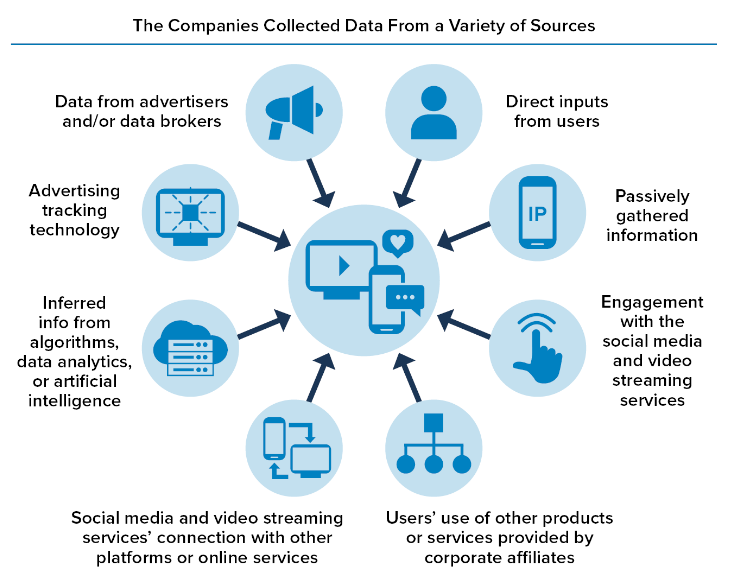
Statement Regarding the FTC 6(b) Study on Data Practices of Social Media and Video Streaming Services
“A Look Behind the Screens Examining the Data Practices of Social Media and Video Streaming Services”
Center for Digital DemocracyWashington, DCContact: Katharina Kopp, kkopp@democraticmedia.org Statement Regarding the FTC 6(b) Study on Data Practices of Social Media and Video Streaming Services -“A Look Behind the Screens Examining the Data Practices of Social Media and Video Streaming Services”The following statement can be attributed to Katharina Kopp, Ph.D., Deputy Director,Center for Digital Democracy:The Center for Digital Democracy welcomes the release of the FTC’s 6(b) study on social media and video streaming providers’ data practices and it evidence-based recommendations.In 2019, Fairplay (then the Campaign for a Commercial-Free Childhood (CCFC)), the Center for Digital Democracy (CDD), and 27 other organizations, and their attorneys at Georgetown Law’s Institute for Public Representation urged the Commission to use its 6(b) authority to better understand how tech companies collect and use data from children.The report’s findings show that social media and video streaming providers’ s business model produces an insatiable hunger for data about people. These companies create a vast surveillance apparatus sweeping up personal data and creating an inescapable matrix of AI applications. These data practices lead to numerous well-documented harms, particularly for children and teens. These harms include manipulation and exploitation, loss of autonomy, discrimination, hate speech and disinformation, the undermining of democratic institutions, and most importantly, the pervasive mental health crisis among the youth.The FTC's call for comprehensive privacy legislation is crucial in curbing the harmful business model of Big Tech. We support the FTC’s recommendation to better protect teens but call, specifically, for a ban on targeted advertising to do so. We strongly agree with the FTC that companies should be prohibited from exploiting young people's personal information, weaponizing AI and algorithms against them, and using their data to foster addiction to streaming videos.That is why we urge this Congress to pass COPPA 2.0 and KOSA which will compel Big Tech companies to acknowledge the presence of children and teenagers on their platforms and uphold accountability. The responsibility for rectifying the flaws in their data-driven business model rests with Big Tech, and we express our appreciation to the FTC for highlighting this important fact. ________________The Center for Digital Democracy is a public interest research and advocacy organization, established in 2001, which works on behalf of citizens, consumers, communities, and youth to protect and expand privacy, digital rights, and data justice. CDD’s predecessor, the Center for Media Education, lead the campaign for the passage of COPPA over 25 years ago in 1998. -
Press Release
Advocates call for FTC action to rein in Meta’s abusive practices targeting kids and teens
Letter from 31 organizations in tech advocacy, children’s rights, and health supports FTC action to halt Meta’s profiting off of young users’ sensitive data
Contact:David Monahan, Fairplay: david@fairplayforkids.orgKatharina Kopp, Center for Digital Democracy: kkopp@democraticmedia.org Advocates call for FTC action to rein in Meta’s abusive practices targeting kids and teensLetter from 31 organizations in tech advocacy, children’s rights, and health supports FTC action to halt Meta’s profiting off of young users’ sensitive data BOSTON/ WASHINGTON DC–June 13, 2023– A coalition of leading advocacy organizations is standing up today to support the Federal Trade Commission’s recent order reining in Meta’s abusive practices aimed at kids and teens. Thirty-one groups, led by the Center for Digital Democracy, the Electronic Privacy Information Center (EPIC), Fairplay, and U.S. PIRG, sent a letter to the FTC saying “Meta has violated the law and its consent decrees with the Commission repeatedly and flagrantly for over a decade, putting the privacy of all users at risk. In particular, we support the proposal to prohibit Meta from profiting from the data of children and teens under 18. This measure is justified by Meta’s repeated offenses involving the personal data of minors and by the unique and alarming risks its practices pose to children and teens.” Comments from advocates: Katharina Kopp, Director of Policy, Center for Digital Democracy:“The FTC is fully justified to propose the modifications of Meta’s consent decree and to require it to stop profiting from the data it gathers on children and teens. There are three key reasons why. First, due to their developmental vulnerabilities, minors are uniquely harmed by Meta’s failure to comply repeatedly with its 2012 and 2020 settlements with the FTC, including its non-compliance with the federal children’s privacy law (COPPA); two, because Meta has failed for many years to even comply with the procedural safeguards required by the Commission, it is now time for structural remedies that will make it less likely that Meta can again disregard the terms of the consent decree; and three, the FTC must affirm its credibility and that of the rule of law and ensure that tech giants cannot evade regulation and meaningful accountability.” John Davisson, Director of Litigation, Electronic Privacy Information Center (EPIC): "Meta has had two decades to clean up its privacy practices after many FTC warnings, but consistently chose not to. That's not 'tak[ing] the problem seriously,' as Meta claims—that's lawlessness. The FTC was right to take decisive action to protect Meta's most vulnerable users and ban Meta from profiting off kids and teens. It's no surprise to see Meta balk at the legal consequences of its many privacy violations, but this action is well within the Commission's power to take.” Haley Hinkle, Policy Counsel, Fairplay: “Meta has been under the FTC's supervision in this case for over a decade now and has had countless opportunities to put user privacy over profit. The Commission's message that you cannot monetize minors' data if you can't or won't protect them is urgent and necessary in light of these repeated failures to follow the law. Kids and teens are uniquely vulnerable to the harms that result from Meta’s failure to run an effective privacy program, and they can’t wait for change any longer.” R.J. Cross, Director of U.S. PIRG’s Don’t Sell My Data campaign: “The business model of social media is a recipe for unhappiness. We’re all fed content about what we should like and how we should look, conveniently presented alongside products that will fix whatever problem with our lives the algorithm has just helped us discover. That’s a hard message to hear day in and day out, especially when you’re a teen. We’re damaging the self-confidence of some of our most impressionable citizens in the name of shopping. It’s absurd. It’s time to short circuit the business model.” ### -
The Honorable Joseph R. BidenPresident of the United StatesThe White House1600 Pennsylvania Avenue NWWashington, DC 20500May 23, 2023Dear President Biden:The undersigned civil rights, consumer protection, and other civil society organizations write to express concern about digital trade negotiations underway as part of the proposed Indo-Pacific Economic Framework (IPEF).Civil society advocates and officials within your own administration have raised increasing concern about discrimination, racial disparities, and inequities that may be “baked into” the algorithms that make decisions about access to jobs and housing, health care, prison sentencing, educational opportunity, insurance rates and lending, deployment of police resources, and much more. To address these injustices, we have advocated for anti-discrimination protections and algorithmic transparency and fairness. We have been pleased that these concepts are incorporated into your recent Executive Order on racial equity,1 as well as the White House’s AI Bill of Rights2 and many other policy proposals. The DOJ, FTC, CFPB, and EEOC also recently released a joint statement underscoring their commitment to combating discrimination in automated systems.3 Any trade agreement must be consistent with, and not undermine, these policies and the values they are advancing.Now, we have learned that the U.S. may be considering proposals for IPEF and other trade agreement negotiations that could sabotage efforts to prevent and remedy algorithmic discrimination, including provisions that could potentially preempt executive and Congressional legal authority to advance these goals. Such provisions may make it harder or impossible for Congress or executive agencies to adopt appropriate policies while also respecting our international trade commitments. For example, trade provisions that guarantee digital firms new secrecy rights over source code and algorithms could thwart potential algorithmic impact assessment and audit requirements, such as testing for racial bias or other violations of U.S. law and regulation. And because the trade negotiations are secret, we do not know how the exact language could affect pivotal civil rights protections. Including such industry-favored provisions in trade deals like IPEF would be a grievous error and undermine the Administration’s own policy goals. We urge the administration to not submit any proposals that could undermine the ability to protect the civil rights of people in the United States, particularly with regard to digital trade. Moreover, there is a great need for transparency in these negotiations. Text already proposed should be made public so the civil rights community and relevant experts can challenge any provisions that could undermine administration goals regarding racial equity, transparency, and fairness. We know that your administration shares our goals of advancing racial equity, including protecting the public from algorithmic discrimination. Thank you for your leadership in this area. For questions or further discussion, please contact Harlan Yu (harlan@upturn.org), David Brody (dbrody@lawyerscommittee.org), and Emily Peterson-Cassin (epetersoncassin@citizen.org).Sincerely,American Civil Liberties Union Center for Democracy & Technology Center for Digital Democracy Data & Society Research Institute Demand Progress Education Fund Electronic Privacy Information Center (EPIC) Fight for the Future Lawyers’ Committee for Civil RightsUnder LawThe Leadership Conference on Civil andHuman Rights NAACPNational Urban League Public Citizen Sikh American Legal Defense andEducation Fund UpturnCC:Secretary of Commerce Gina Raimondo U.S. Trade Representative Katherine TaiNational Economic Council Director Lael BrainardNational Security Advisor Jake SullivanDomestic Policy Council Director Susan RiceIncoming Domestic Policy Council Director Neera TandenDomestic Policy Council Deputy Director for Racial Justice and Equity Jenny Yang1 Exec. Order No. 14091, 88 Fed. Reg. 10825, Feb. 16, 2023, available at https://www.federalregister.gov/documents/2023/02/22/2023-03779/further-advancing-racial-equity-and-support-for-underserved-communities-through-the-federal.2 The White House, Blueprint for an AI Bill of Rights, Oct. 22, 2022, available at https://www.whitehouse.gov/ostp/ai-bill-of-rights.3 Joint Statement on Enforcement Efforts Against Discrimination and Bias in Automated Systems, CFPB, DOJ, EEOC, FTC, April 25, 2023, available at https://www.ftc.gov/system/files/ftc_gov/pdf/EEOC-CRT-FTC-CFPB-AI-Joint-Statement%28final%29.pdf.
-
Commercial Surveillance expands via the "Big" Screen in the Home Televisions now view and analyze us—the programs we watch, what shows we click on to consider or save, and the content reflected on the “glass” of our screens. On “smart” or connected TVs, streaming TV applications have been engineered to fully deliver the forces of commercial surveillance. Operating stealthily inside digital television sets and streaming video devices is an array of sophisticated “adtech” software. These technologies enable programmers, advertisers and even TV set manufacturers to build profiles used to generate data-driven, tailored ads to specific individuals or households. These developments raise important questions for those concerned about the transparency and regulation of political advertising in the United States.Also known as “OTT” (“over-the-top” since the video signal is delivered without relying on traditional set-top cable TV boxes), the streaming TV industry incorporates the same online advertising techniques employed by other digital marketers. This includes harvesting a cornucopia of information on viewers through alliances with leading data-brokers. More than 80 percent of Americans now use some form of streaming or Smart TV-connected video service. Given such penetration, it is no surprise that streaming TV advertising is playing an important role in the upcoming midterm elections. And, streaming TV will be an especially critical channel for campaigns to vie for voters in 2024. Unlike political advertising on broadcast television or much of cable TV, which is generally transmitted broadly to a defined geographic market area, “addressable” streaming video ads appear in programs advertisers know you actually watch (using technologies such as dynamic ad insertion). Messaging for these ads can also be fine-tuned as a campaign progresses, to make the message more relevant to the intended viewer. For example, if you watch a political ad and then sign up to receive campaign literature, the next TV commercial from a candidate or PAC can be crafted to reflect that action. Or, if your data profile says you are concerned about the costs of healthcare, you may see a different pitch than your nextdoor neighbor who has other interests. Given the abundance of data available on households, including demographic details such as race and ethnicity, there will also be finely tuned pitches aimed at distinct subcultures produced in multiple languages.An estimated $1.4 billion dollars will be spent on streaming political ads for the midterms (part of an overall $9 billion in ad expenditures). With more people “cutting the cord” by signing up for cheaper, ad-supported streaming services, advances in TV technologies to enable personalized data-driven ad targeting, and the integration of streaming TV as a key component of the overall online marketing apparatus, it is evident that the TV business has changed. Even what’s considered traditional broadcasting has been transformed by digital ad technologies. That’s why it’s time to enact policy safeguards to ensure integrity, fairness, transparency and privacy for political advertising on streaming TV. Today, streaming TV political ads already combine information from voter records with online and offline consumer profile data in order to generate highly targeted messages. By harvesting information related to a person’s race and ethnicity, finances, health concerns, behavior, geolocation, and overall digital media use, marketers can deliver ads tied to our needs and interests. In light of this unprecedented marketing power and precision, new regulations are needed to protect consumer privacy and civic discourse alike. In addition to ensuring voter privacy, so personal data can’t be as readily used as it is today, the messaging and construction of streaming political ads must also be accountable. Merely requiring the disclosure of who is buying these ads is insufficient. The U.S. should enact a set of rules to ensure that the tens of thousands of one-to-one streaming TV ads don’t promote misleading or false claims, or engage in voter suppression and other forms of manipulation. Journalists and campaign watchdogs must have the ability to review and analyze ads, and political campaigns need to identify how they were constructed—including the information provided by data brokers and how a potential voter’s viewing behaviors were analyzed (such as with increasingly sophisticated machine learning and artificial intelligence algorithms). For example, data companies such as Acxiom, Experian, Ninth Decimal, Catalina and LiveRamp help fuel the digital video advertising surveillance apparatus. Campaign-spending reform advocates should be concerned. To make targeted streaming TV advertising as effective as possible will likely require serious amounts of money—for the data, analytics, marketing and distribution. Increasingly, key gatekeepers control much of the streaming TV landscape, and purchasing rights to target the most “desirable” people could face obstacles. For example, smart TV makers– such as LG, Roku, Vizio and Samsung– have developed their own exclusive streaming advertising marketplaces. Their smart TVs use what’s called ACR—”automated content recognition”—to collect data that enables them to analyze what appears on our screens—“second by second.” An “exclusive partnership to bring premium OTT inventory to political clients” was recently announced by LG and cable giant Altice’s ad division. This partnership will enable political campaigns that qualify to access 30 million households via Smart TVs, as well as the ability to reach millions of other screens in households known to Altice. Connected TVs also provide online marketers with what is increasingly viewed as essential for contemporary digital advertising—access to a person’s actual identity information (called “first-party” data). Streaming TV companies hope to gain permission to use subscriber information in many other ways. This practice illustrates why the Federal Trade Commission’s (FTC) current initiative designed to regulate commercial surveillance, now in its initial stage, is so important. Many of the critical issues involving streaming political advertising could be addressed through strong rules on privacy and online consumer protection. For example, there is absolutely no reason why any marketer can so easily obtain all the information used to target us, such as our ethnicity, income, purchase history, and education—to name only a few of the variables available for sale. Nor should the FTC allow online marketers to engage in unfair and largely stealth tactics when creating digital ads—including the use of neuroscience to test messages to ensure they respond directly to our subconscious. The Federal Communications Commission (FCC), which has largely failed to address 21st century video issues, should conduct its own inquiry “in the public interest.” There is also a role here for the states, reflecting their laws on campaign advertising as well as ensuring the privacy of streaming TV viewers.This is precisely the time for policies on streaming video, as the industry becomes much more reliant on advertising and data collection. Dozens of new ad-supported streaming TV networks are emerging—known as FAST channels (Free Ad Supported TV)—which offer a slate of scheduled shows with commercials. Netflix and Disney+, as well as Amazon, have or are soon adopting ad-supported viewing. There are also coordinated industry-wide efforts to perfect ways to more efficiently target and track streaming viewers that involve advertisers, programmers and device companies. Without regulation, the U.S. streaming TV system will be a “rerun” of what we historically experienced with cable TV—dashed expectations of a medium that could be truly diverse—instead of a monopoly—and also offer both programmers and viewers greater opportunities for creative expression and public service. Only those with the economic means will be able to afford to “opt-out” of the advertising and some of the data surveillance on streaming networks. And political campaigns will be allowed to reach individual voters without worry about privacy and the honesty of their messaging. Both the FTC and FCC, and Congress if it can muster the will, have an opportunity to make streaming TV a well-regulated, important channel for democracy. Now is the time for policymakers to tune in.***This essay was originally published by Tech Policy Press.Support for the Center for Digital Democracy’s review of the streaming video market is provided by the Rose Foundation for Communities and the Environment.Jeff Chester